
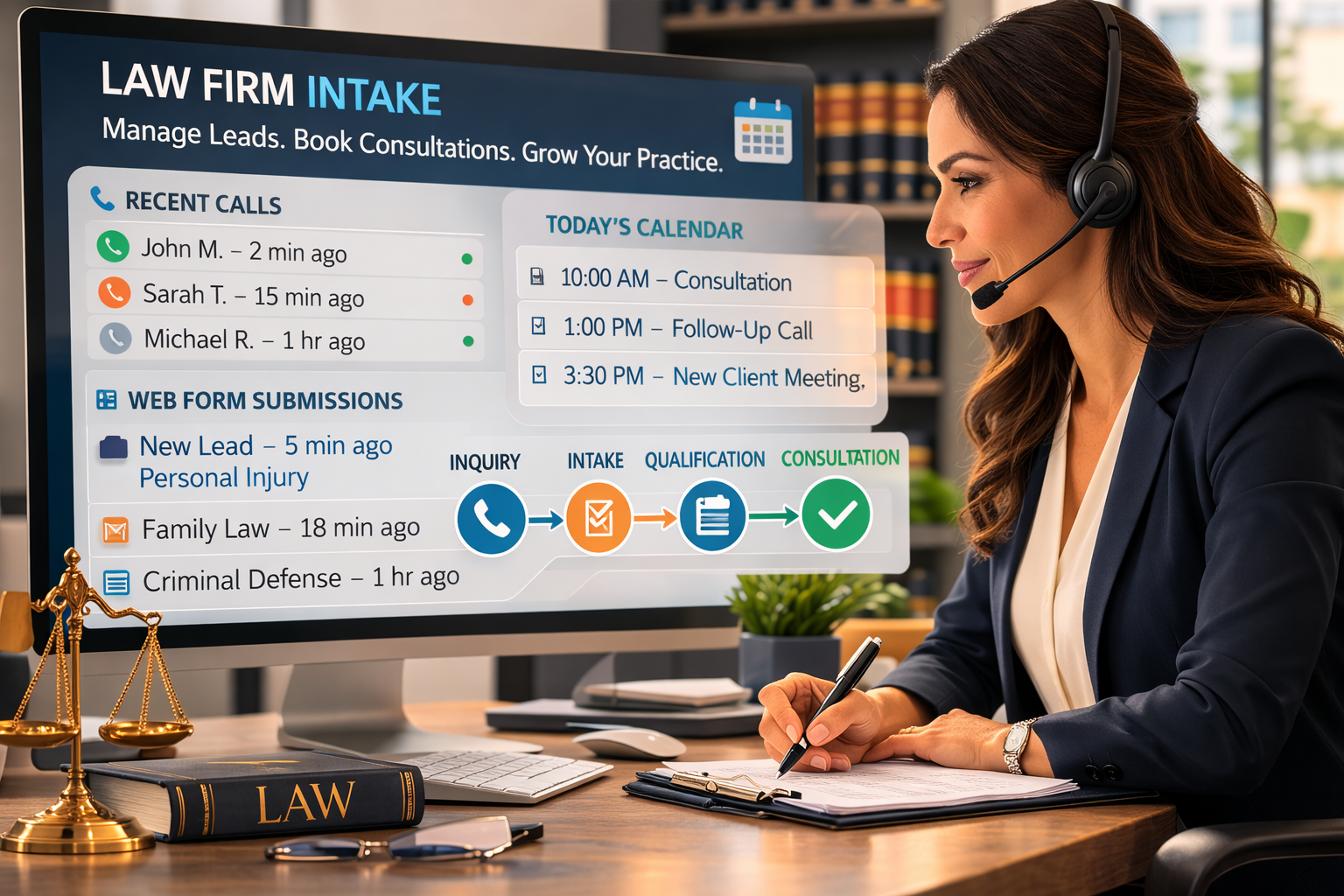

Every law firm runs on new client acquisition. But for most firms, the intake process is where a significant number of qualified leads quietly disappear. The calls do not get returned fast enough. The follow-up is inconsistent. The intake form asks the right questions, but no one reviews the responses before the next day. Structured intake automation addresses each of these points directly.
Table of Contents
The Cost of Missed Intake Calls
When someone calls a law firm, they are often in the middle of a stressful situation. They want to know if the firm can help them — and they want to know quickly. If they reach voicemail and do not hear back within the hour, most will call the next firm on the list.
Research across legal intake consistently shows that speed-to-response is one of the strongest predictors of whether a potential client follows through. It is not about being the most qualified firm. It is about being the first one to respond clearly and professionally.
Missed calls and slow responses represent real revenue losses. For a firm that handles personal injury, family law, or estate planning, even a handful of missed conversions per month adds up significantly over a year.
The Inconsistency Problem
Even firms with dedicated intake staff face inconsistency. Different staff members ask different questions. Some leads get called back within the hour; others wait until the next morning. Some potential clients receive a follow-up email; others hear nothing after the initial call.
This inconsistency is not a people problem. It is a systems problem. Without a defined process and the tools to enforce it, intake will always vary based on who is working and how busy they are.
A structured intake system creates a consistent experience for every potential client who contacts the firm, regardless of when they reach out or who is on the intake line that day.
What a Structured Intake Workflow Looks Like
A well-designed intake workflow starts the moment a lead makes contact. If they call during business hours, the system can route and log the call. If they call after hours, an automated response acknowledges the inquiry and either collects initial information or sets expectations for when they will be reached.
Web form submissions trigger immediate confirmation messages and, where appropriate, a short qualifying questionnaire. The responses are automatically organized in the CRM before a staff member ever picks up the phone for the consultation call.
Every step has a defined owner, a defined action, and a defined timeline. Nothing waits for someone to remember to do it.
Automated Follow-Up for Legal Leads
Not every potential client is ready to retain a firm after the first call. Some need time to think. Some are comparing options. Some had a complicated initial conversation and need a reason to come back.
Automated follow-up sequences allow a firm to stay in front of those leads without requiring a paralegal to manually check a list every day. A structured series of messages — a check-in, a resource, a gentle reminder of what the firm offers — goes out on a defined schedule and stops automatically when the lead responds or moves forward.
This keeps warm leads engaged without adding work to the intake team’s day.
Better Case Qualification Before the Consultation
Attorney time is the firm’s most valuable resource. Spending 30 minutes on a consultation call with someone who clearly does not have a viable case is expensive. A structured intake process can surface the key qualifying information before that call ever happens.
Intake questionnaires, triggered automatically after initial contact, can gather facts about the situation, timeline, and what the potential client is looking for. That information is reviewed before the consultation, so the attorney walks in with context and can get to the substance of the conversation faster.
This also creates a better experience for the potential client. They feel heard from the start, and the consultation itself is more focused and productive.
How Automation Supports Staff — Not Replaces Them
The intake staff at any firm does work that cannot be automated. They build rapport, navigate emotionally charged conversations, and exercise judgment that no system can replicate. The goal of automation is not to remove them from the process.
The goal is to remove the administrative burden that eats into their time — logging notes, sending confirmation emails, tracking who needs a follow-up call, updating the CRM after every interaction. When the system handles that overhead, intake staff can focus on what they are actually good at.
Firms that implement structured intake automation typically see faster response times, higher conversion rates from consultation to retained client, and better data on where leads are coming from and where they drop off.
Learn how structured intake systems work for law firms at syncshiftai.com/ai-for-attorneys
