
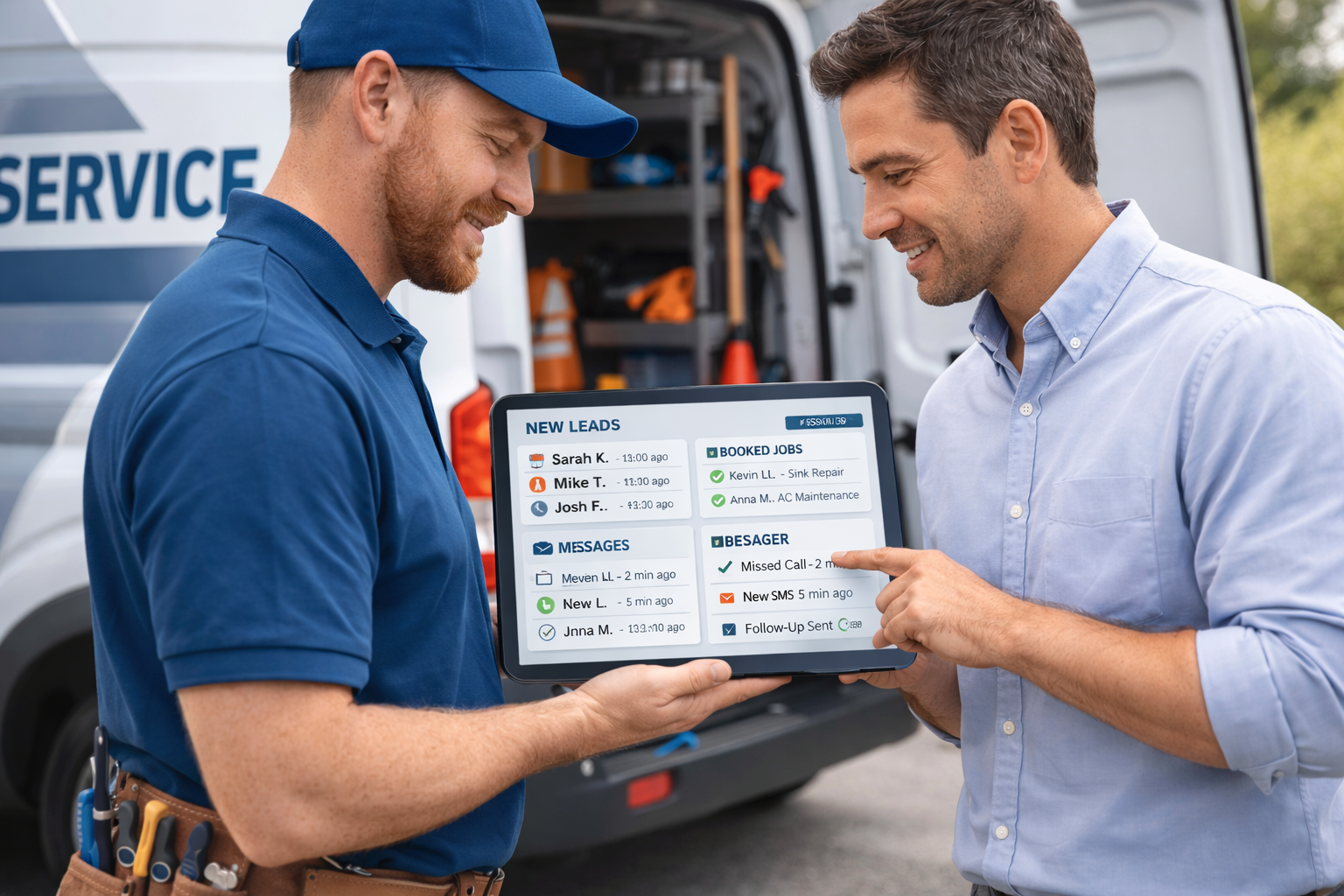

Home service businesses — HVAC, remodeling, plumbing, landscaping, roofing — operate in a market where the first company to respond often gets the job. Most operators know this. The challenge is that responding fast when you are out in the field, running a crew, and managing three other projects at once is genuinely difficult. Automation does not solve every operational problem, but it closes the gaps that cost you jobs.
Table of Contents
Why Speed-to-Lead Matters More Than You Think
When a homeowner needs a plumber or wants an HVAC tune-up before summer, they search, they call a few companies, and they book with whoever gets back to them first. This is not hypothetical — it is how service purchasing decisions actually happen.
Studies on service business lead response consistently show that the odds of reaching a lead drop dramatically after the first five minutes. After an hour, most leads have already made a decision. The company that responds within minutes wins the job. The company that responds that evening often does not even get the chance to quote.
For busy operators, responding that fast manually is almost impossible. An automated response system handles the first contact instantly — acknowledging the inquiry, providing basic information, and moving the lead toward booking or a callback — so nothing slips through.
After-Hours Calls: The Jobs You Are Losing Without Knowing It
A large percentage of inbound calls to home service companies happen outside normal business hours. Homeowners notice the leaking pipe at night. They decide they need a quote for the deck after the kids are in bed. They call on Saturday morning when your office is closed.
If those calls go to voicemail with no follow-up system, most of those potential customers will book with a competitor by Monday. An automated after-hours workflow can text or email a response immediately, collect basic information about the job, and queue the lead for a callback first thing in the morning — with context already captured.
The homeowner feels acknowledged. Your team walks in Monday with a prioritized list of warm leads ready to be contacted, not a pile of voicemails to sort through.
Estimate Follow-Up: The Step Most Companies Skip
Sending an estimate and waiting is one of the most common revenue leaks in the home services industry. A homeowner gets your quote, receives two others, and makes a decision — often without you doing anything to stay top of mind.
An automated estimate follow-up sequence changes this. Two days after the estimate goes out, a message checks in. A few days later, another one answers a common question or highlights something specific about your work. The sequence runs automatically and stops as soon as the customer responds or books.
This is not aggressive sales follow-up. It is just staying present in a decision that your competition is probably ignoring after the first email.
Scheduling Bottlenecks
Scheduling in home services is often handled through a combination of phone calls, text messages, and someone manually checking availability. It works, but it takes time and creates room for error — double bookings, missed confirmations, leads that fall off because scheduling back-and-forth took too long.
Automated scheduling allows customers to self-book a time window directly from a confirmation message or estimate email. Available slots are shown in real time based on your crew’s calendar. The appointment is confirmed automatically, reminders go out before the job, and the system flags any changes.
Your dispatcher or office manager still controls the schedule. The automation just removes the manual coordination overhead.
Repeat Customer Reminders
One of the most underleveraged opportunities in home services is the repeat customer. You serviced someone’s HVAC last spring. They need it again this year. But if no one reaches out, they will search Google again and might book with a competitor who shows up first.
Automated seasonal or annual reminders can go out to past customers based on the service type and date. A quick text or email reminding them it is time for their annual tune-up, gutter cleaning, or inspection is a simple way to generate repeat bookings without any outbound sales effort.
For a business with a few hundred past customers, this kind of automation can generate a meaningful number of additional jobs each year with minimal setup.
Reducing Admin Workload
Between dispatching, quoting, scheduling, invoicing, and following up, the administrative side of a service business can consume more time than the actual work. Most of that overhead is repetitive: the same confirmations, the same reminders, the same status updates sent over and over.
Automating those tasks does not require overhauling your business. It starts with identifying which steps in your current process are repetitive and time-consuming, then putting a system in place to handle them automatically. Over time, the cumulative hours saved translate into capacity — to take on more jobs, respond faster, or simply reduce the pressure on the team running the back office.
See how automation works for service companies at syncshiftai.com/ai-for-home-services
